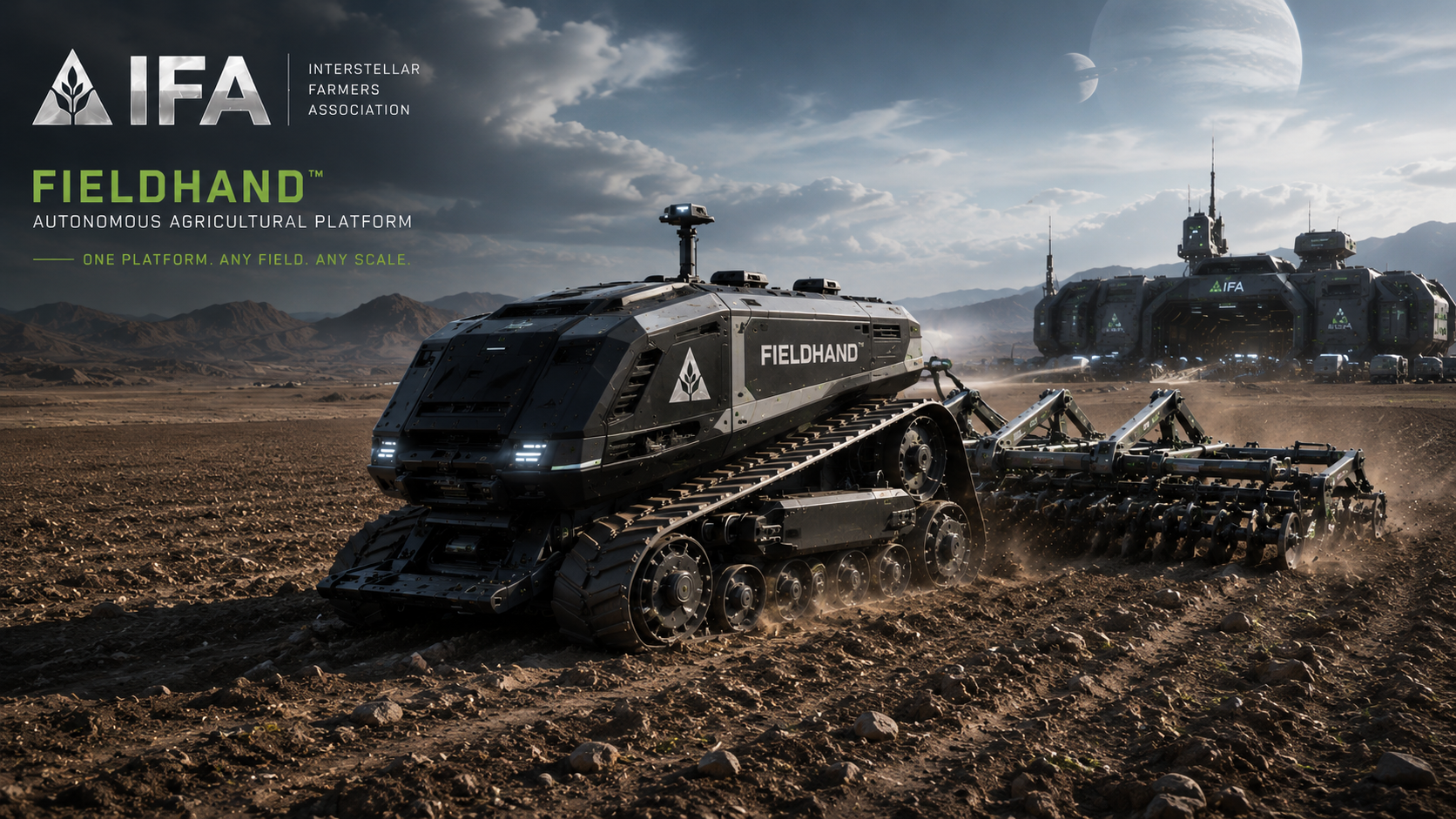
ONE PLATFORM
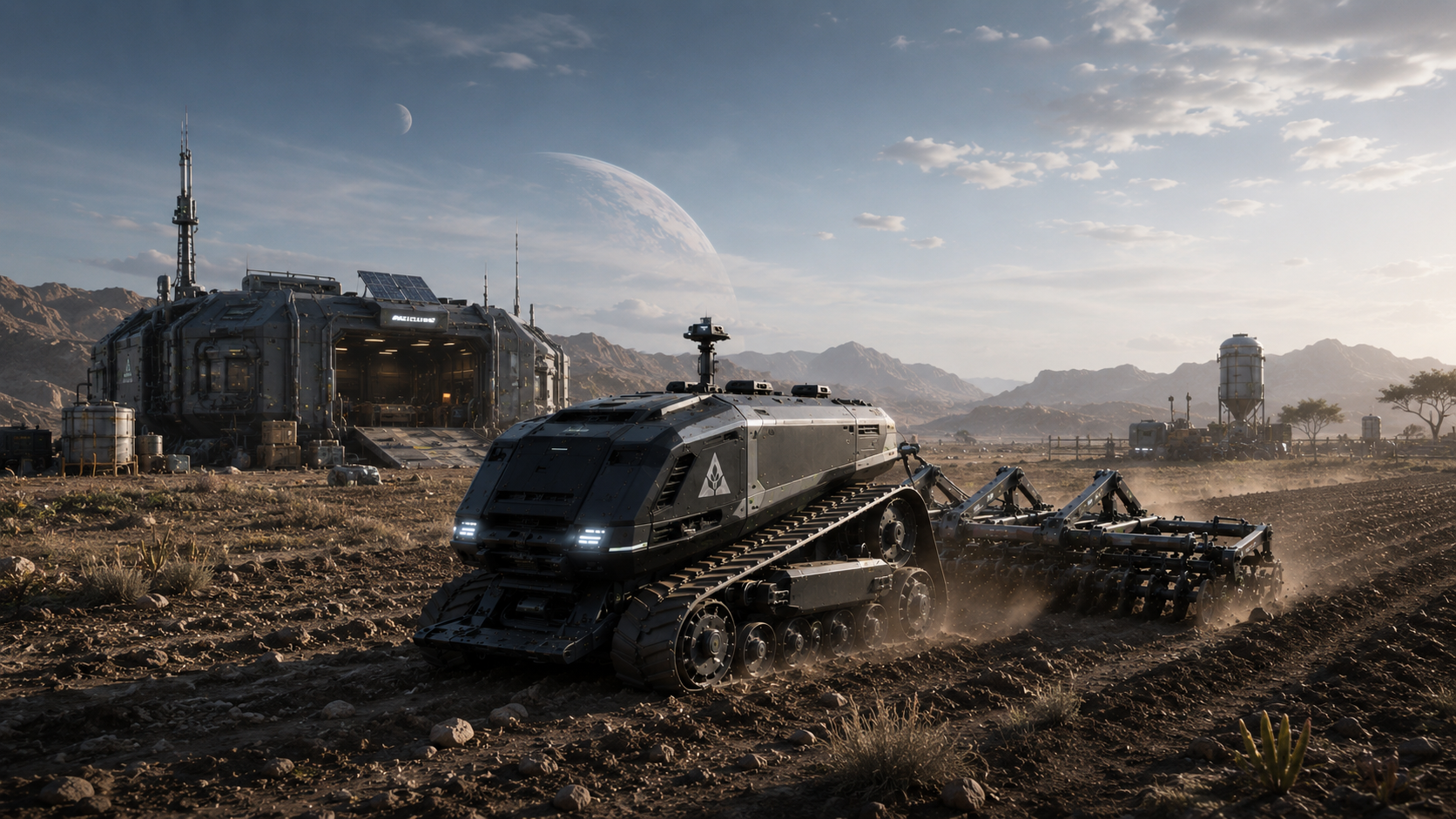
At the centre of FIELDHAND is a durable mobility, power and control chassis. The work is defined by the implement fitted to it: cultivation, seeding, treatment, inspection, harvesting or material handling.
- Terrain-aware mobility and navigation
- Crop and environmental sensing
- Implement control and condition monitoring
- Authenticated machine recognition
- Autonomous route planning and task execution
A FIELDHAND does not spend its life waiting for the one season in which its original machinery is useful. When the operation changes, the platform changes with it.
THE INDUSTRIAL CHASSIS
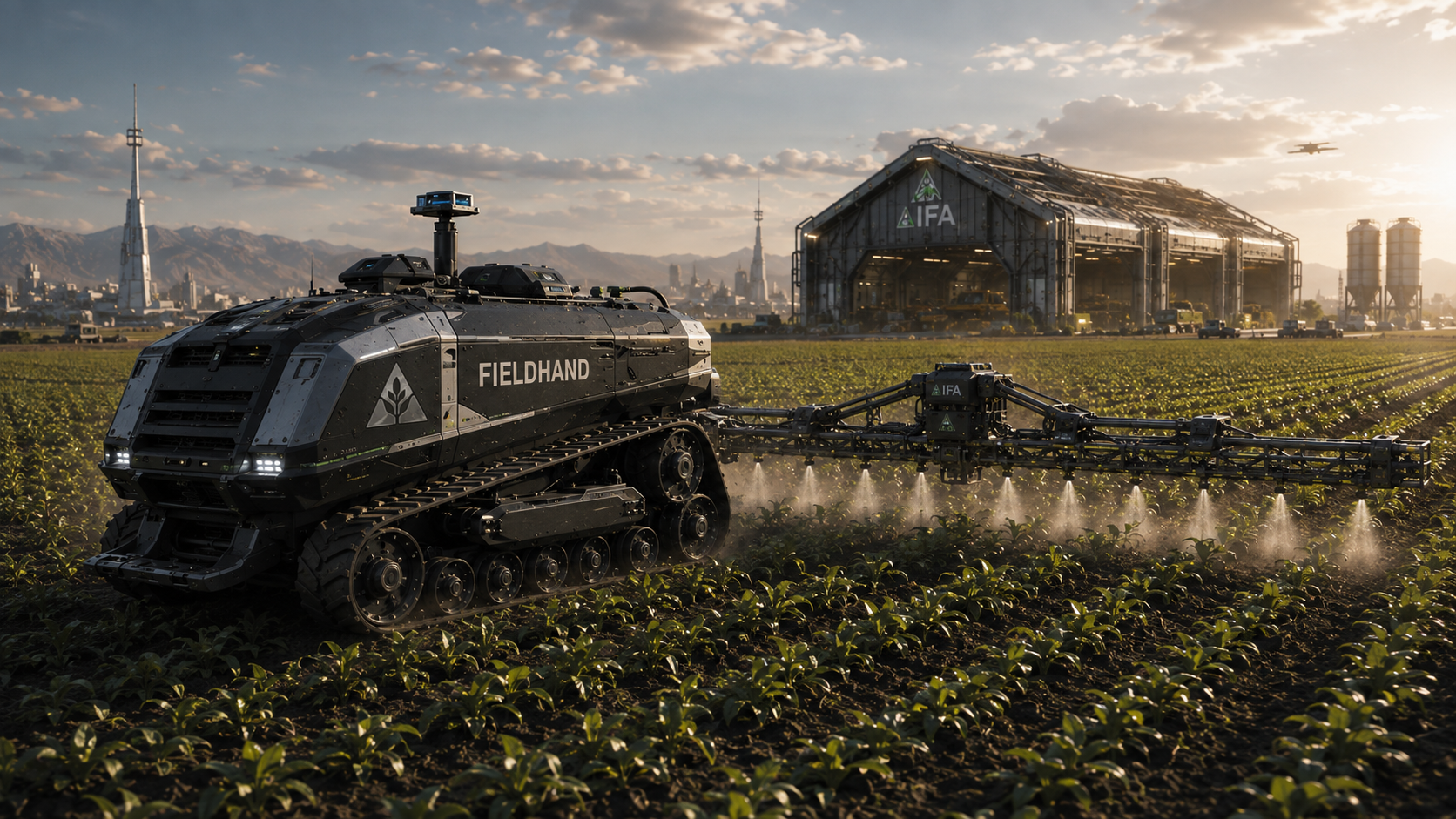
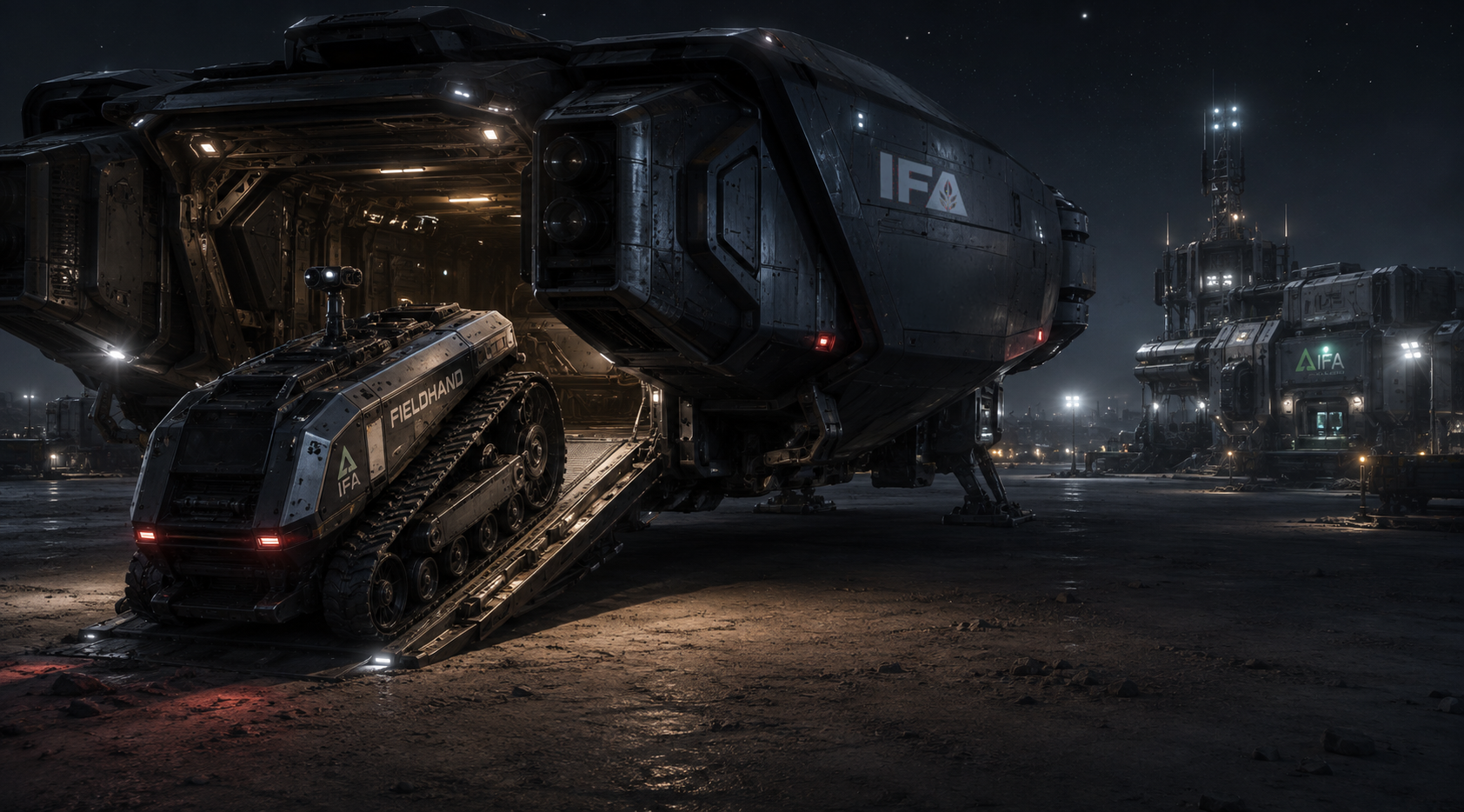
IFA selected Greycat Industrial as FIELDHAND’s mobility and systems-integration partner. Greycat equipment is already at home wherever the Empire expects machinery to work hard, from compact site vehicles and industrial protection to remote mining platforms. FIELDHAND carries that working lineage into agriculture.
The division of responsibility is precise. Greycat engineers the tracked chassis, component bay and field-service architecture. IFA supplies the agricultural implements, sensor logic, FIELDHAND Blade, Handshake and SWARMCORE coordination system.
A serviceable vehicle-class industrial power plant and matched cooler support the traction, computing, sensors and fitted implement. Both components remain accessible from the service bay, allowing a barn or HIVE crew to exchange a failed unit without dismantling the agricultural platform around it.
THE BARN
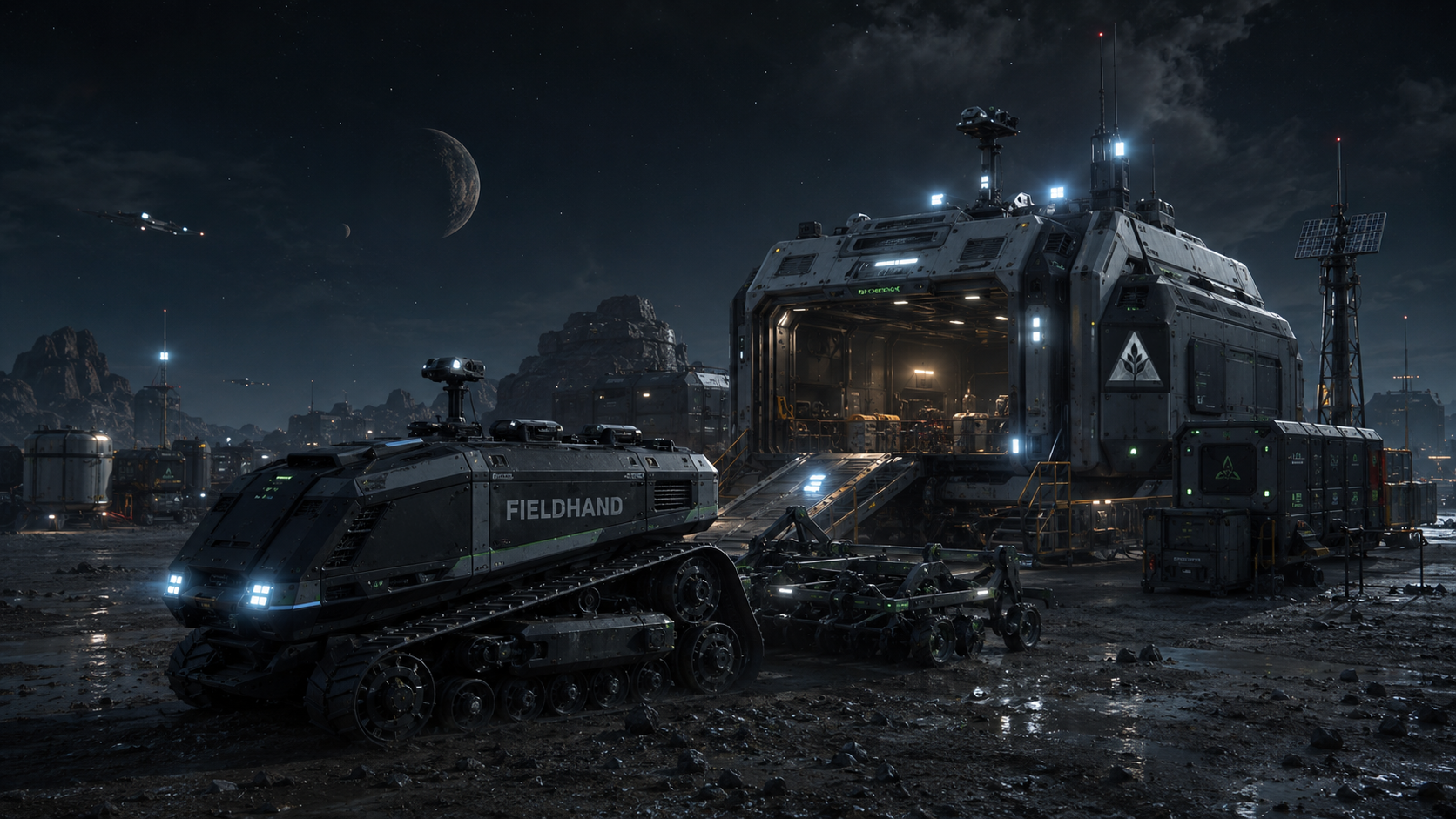
A FIELDHAND can operate from a compact service barn rather than a conventional machinery yard. The barn stores implements and consumables, accepts harvested material, and provides the protected space required for inspection, repair and reconfiguration.
The arrangement is deliberately modest. A small holding does not need an industrial depot before its first autonomous machine can be useful. It needs a place where that machine can return, exchange its working tool, replenish what it has used and depart with the next assignment already waiting.
THE FIELDHAND BLADE
FIELDHAND autonomy is carried by a dedicated agricultural computer Blade suite integrated with the platform’s onboard computer. As shipboard Blades expand the functions a computer can perform, the FIELDHAND Blade supplies the specialised logic required to read terrain, interpret crop sensors, control an implement and complete an assigned operation.
It is not a substitute for agricultural intent. The operator defines the field, the task and the acceptable limits. The Blade decides how to execute that order locally: choosing a route, maintaining working depth or spacing, responding to obstacles, and suspending the operation when conditions move beyond tolerance.
That local authority matters on distant holdings. A FIELDHAND can continue working through disrupted communications because the machine carries the assignment, the field model and the rules required to act without a constant remote hand on the controls.
THE HANDSHAKE
Autonomy becomes more valuable when two machines meet. Every FIELDHAND carries the Handshake: a secure machine-to-machine protocol through which authenticated units identify one another, compare assignments and decide whether cooperation is useful.
A Handshake exchanges only the operational information required for the work in front of them:
- Current assignment and fitted implement
- Remaining capacity and machine condition
- Position and intended route
- Completed coverage
- Relevant terrain, crop and hazard observations
Two FIELDHANDs approaching the same boundary do not duplicate each other’s work. They negotiate a division, revise their routes and continue. When a third arrives, the plan opens again and the field is redistributed without bringing the operation to a halt.
SWARMCORE™
SWARMCORE™ is the coordination layer built upon those local Handshakes. It does not command the field from a single vulnerable centre. Instead, each participating FIELDHAND contributes what it can see and what it can do, allowing the working picture to follow the machines themselves.
A unit joining the operation receives the current boundaries, progress and hazards, then offers its implement, capacity and route options to the group. A unit leaving hands off its unfinished work before it departs. If communications divide the formation, each connected group retains enough of the plan to continue safely until contact is restored.
The result is not a crowd of machines following identical instructions. It is a field crew whose members continually revise the work around weather, terrain, breakdowns and the changing condition of the crop.
TRUST BY HANDSHAKE
Cooperation begins with recognition. FIELDHAND units do not accept an unfamiliar machine merely because it speaks the correct protocol. Identity, permissions and task authority are verified before routes or control responsibilities are shared.
This distributed model limits the consequences of a lost machine or broken link. There is no single field controller whose failure leaves every platform waiting. The formation degrades by degrees: fewer machines mean less capacity, not the disappearance of the plan.
COOPERATIVE FIELDWORK
Once joined, FIELDHANDs organise around the field rather than around ownership. A seeding platform can follow the cultivation pass as soon as ground becomes ready. Inspection units can redirect treatment machinery toward emerging problems. Harvesting platforms can call material handlers before their own capacity becomes the bottleneck.
Because machines share coverage and condition data, support arrives where the operation is slowing—not where a fixed schedule assumed it would be. The farm becomes a sequence of connected decisions made close to the work.
SCALE BY ADDITION
FIELDHAND is designed to expand by addition. A farmer does not replace the original platform when the cultivated area grows; another platform joins it. The same is true when several holdings choose to pool equipment for a planting window or harvest.
The advantage is continuity. The first machine remains useful inside the tenth season and the hundredth unit. Capability increases through implements and numbers, while training, servicing and coordination remain built around a common platform.
THE HIVE™
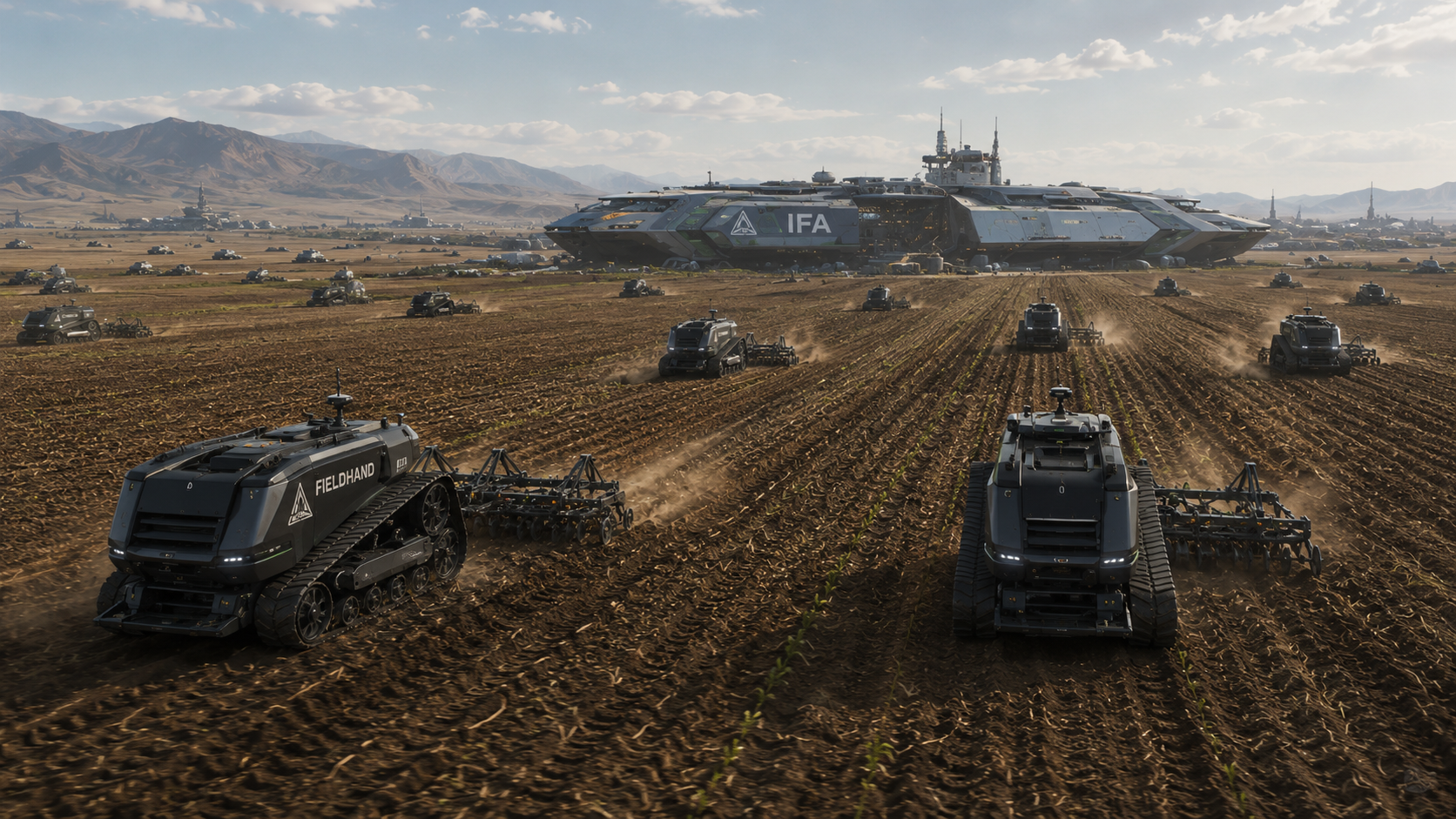
At larger scales the compact barn gives way to the HIVE™, a mobile support platform that advances behind the working front. It carries replacement implements, seed, treatments, consumables and service equipment while receiving harvested material and machines requiring attention.
A FIELDHAND enters with one role and leaves with another. Its harvest is transferred, depleted stores are replenished, the working implement is exchanged or serviced, and the Blade receives the next assignment. The machine returns to the field without travelling back to a distant permanent yard.
The HIVE does not direct every movement of the swarm. It keeps the swarm supplied, repaired and correctly equipped—the less glamorous work upon which every autonomous operation still depends.
A MOBILE FARMYARD
Permanent infrastructure fixes an agricultural operation to the distance its machines can economically travel. The HIVE moves that limit. As the working front advances, implements and supplies advance with it; harvested material begins its outward journey from the same moving service line.
This allows FIELDHAND formations to cross large cultivation zones without stretching every return trip back to a central barn. The field crew remains close to the work, and the farmyard follows.
ONE FARMER, ONE ORGANISATION
The smallest FIELDHAND operation is easy to recognise: one owner, one platform and one barn. The machine performs the sequence of jobs the season requires, changing implements as the work progresses.
A cooperative or organisation uses the same architecture differently. Machines and implements can be pooled for narrow seasonal windows, allowing a holding that owns no specialised harvester—or has lost one at the worst possible moment—to call capacity from elsewhere in the network.
At industrial scale, hundreds of FIELDHANDs can be divided into cultivation, seeding, monitoring, treatment, harvest and transfer groups, with one or more HIVEs moving behind them. The formation is larger, but its logic remains familiar: authenticated machines, shared field knowledge and work redistributed as conditions change.
FIELDHAND AND TITAN
FIELDHAND does not replace the Titan Project, and Titan does not make distributed machinery obsolete. They answer different questions.
Titan is built for overwhelming regional throughput: capital-scale machines establishing a broad mechanical front. FIELDHAND supplies precision, flexibility and persistence around that front—working irregular ground, maintaining edges, correcting missed areas, inspecting crops and continuing operations where a Titan deployment would be disproportionate.
Used together, the systems form layers. Titan moves the horizon. FIELDHAND attends to what the horizon leaves behind.
AN EXPANDING PLATFORM
FIELDHAND is not defined by a closed catalogue of attachments. New implements, sensors and Blade functions can be introduced without replacing the agricultural chassis already in service. The platform’s value therefore grows with the work it learns to carry.
That openness also protects the operator from a familiar agricultural trap: buying an entire machine for a task that occupies only a fraction of the year. FIELDHAND keeps the expensive systems in motion and changes the equipment that meets the soil.
THE FIELD REMEMBERS
A FIELDHAND begins as a single machine leaving a single barn. Over time it becomes part of something larger: a record of the ground it has crossed, the crops it has observed and the machines with which it has shared the season.
More platforms join. A HIVE appears beyond the ridge. The working front spreads until no operator can see its full width, yet the first FIELDHAND remains inside it—still carrying its own assignment, still exchanging the Handshake, still doing the work immediately beneath its tracks.
ONE PLATFORM. ANY FIELD. ANY SCALE.